

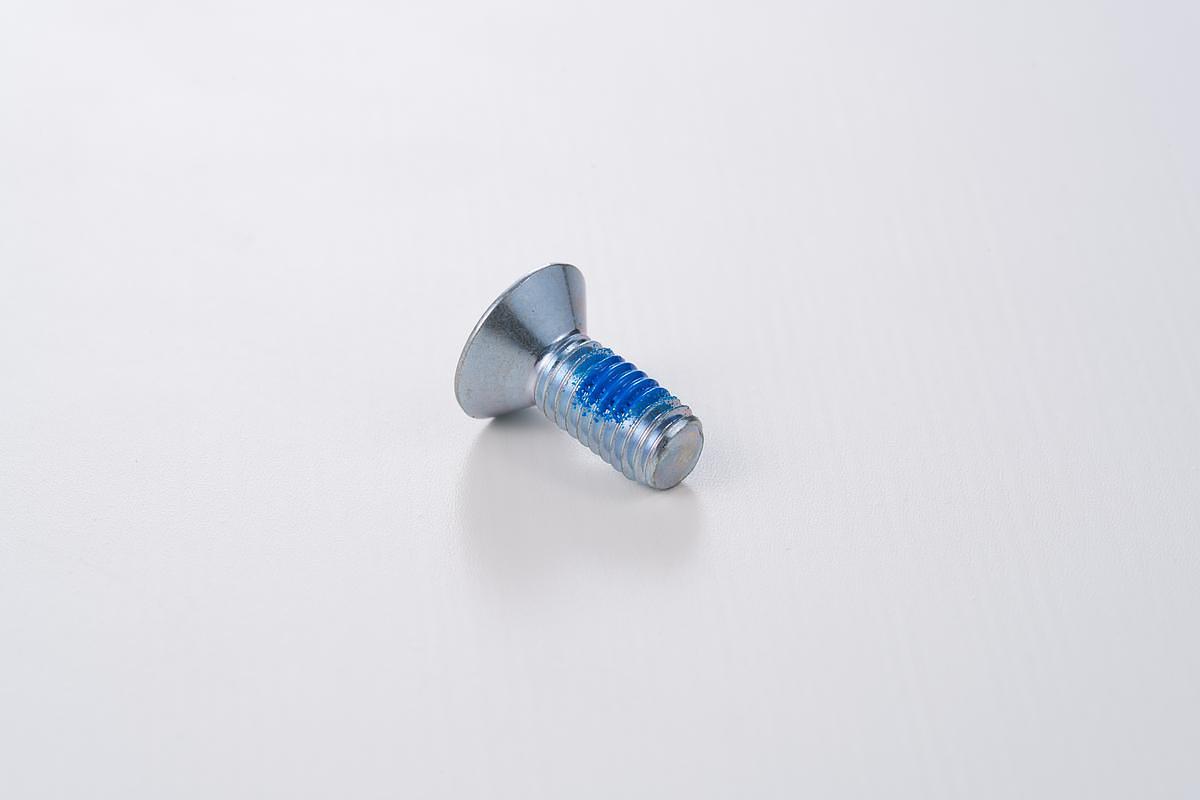
彩色塗層背後的防鬆秘密
仔細看,有些螺絲的牙紋上,會多一小塊彩色塗層。看起來不起眼,卻能幫助螺絲在振動的環境下,降低自行鬆轉的機會。
而且,這些塗層雖然外觀相似,防鬆的原理卻可能完全不同。
今天,我們先介紹兩種常見的螺紋防鬆塗膠:尼龍膠與化學膠。
第一種:尼龍膠,靠的是機械阻力。
尼龍膠是在螺紋表面附著一層尼龍材料。當螺絲鎖入時,尼龍受到擠壓,增加螺紋之間的摩擦與轉動阻力,讓螺絲不容易自行鬆轉。
它不需要等待化學固化,鎖入後就能產生防鬆作用。
對於需要調整,或可能重複拆裝的場合,尼龍膠通常比較方便。不過,能重複使用幾次,仍要依產品規格與實際測試確認。
第二種:化學膠,靠的是固化後的黏結。
以常見的預塗微膠囊型為例,膠材會先塗在螺紋上。當螺絲鎖入時,擠壓與剪切會使微膠囊破裂,啟動化學反應。
經過固化後,膠材會在螺紋之間形成黏結,達到防鬆效果。
因此,使用化學膠時,要留意產品要求的固化時間。拆卸後,也不能直接假設原本的塗層仍有相同效果,必須依產品要求重新處理。
簡單記住:
尼龍膠,靠擠壓產生阻力。
化學膠,靠固化形成黏結。
那麼,該選哪一種?
不能只看顏色,也不是越難拆就越好。還要考慮組裝方式、拆裝需求、使用溫度,以及實際要求的防鬆表現。
下一集,我們再來談化學膠有哪些常見品牌與種類,以及選用時要注意什麼。
竣錩|精心設計,安心鎖固。
Look closely. Some screws have a small, colorful coating on their threads. It may seem insignificant, but it can help resist loosening when the assembly is exposed to vibration.
And while these coatings may look similar, the way they work can be completely different.
Today, let’s explore two common types of thread-locking coatings: nylon patches and chemical threadlockers.
First: nylon patches. They work through mechanical resistance.
A nylon patch is a layer of nylon material applied to the screw threads. During installation, the nylon is compressed, increasing friction and rotational resistance between the mating threads. This helps prevent the screw from loosening on its own.
No chemical curing is required, so the patch provides locking resistance immediately upon installation.
Nylon patches are often a convenient option for applications requiring adjustment or repeated assembly and disassembly. However, the number of reuse cycles must be verified against the product specifications and actual testing.
Second: chemical threadlockers. They work by forming a bond as they cure.
Take a common pre-applied microencapsulated threadlocker as an example. The adhesive is applied to the threads before assembly. During installation, compression and shearing rupture the microcapsules and initiate a chemical reaction.
As the adhesive cures, it forms a bond between the mating threads to resist loosening.
That means the specified curing time matters. After disassembly, you should not assume the original coating will deliver the same performance. Follow the product requirements for cleaning and reapplication or reprocessing.
Here’s an easy way to remember:
Nylon patches create resistance through compression.
Chemical threadlockers create a bond through curing.
So, which one should you choose?
Color alone cannot tell you, and harder to remove does not always mean better. The right choice depends on the assembly process, maintenance needs, operating temperature, and required locking performance.
In the next episode, we’ll explore common brands and types of chemical threadlockers—and what to consider when choosing one.
Jun Fastener | Engineered to Fasten with Confidence.